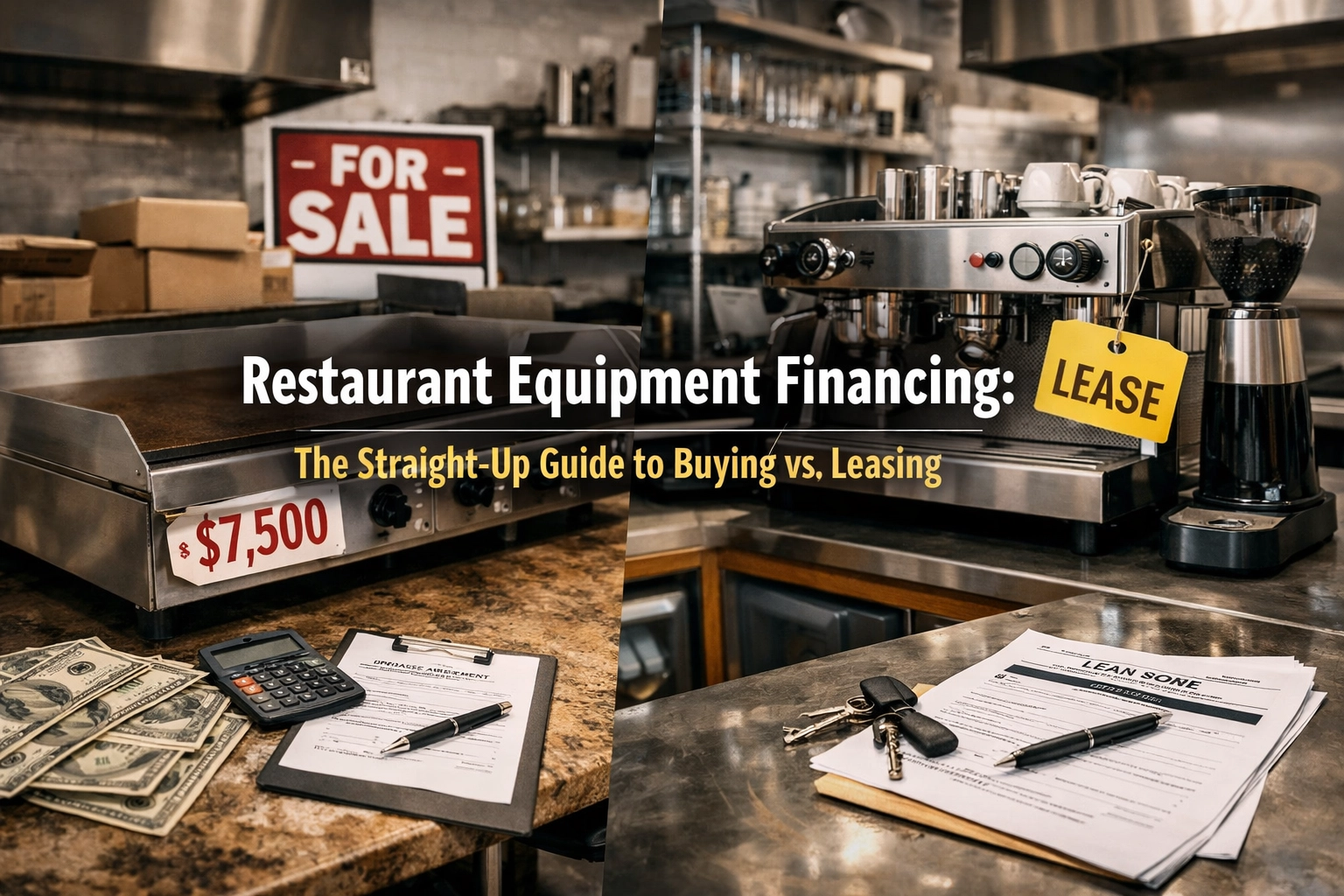
Restaurant Equipment Financing: The Straight-Up Guide to Buying vs. Leasing

Running a restaurant in Canada is a balancing act. On one hand, you want the best gear, the high-end range that sears perfectly, the walk-in cooler that never falters, and a POS system that doesn’t crash during the Saturday night rush. On the other hand, you have to keep an eye on your bank balance.
Whether you’re opening a new spot in Toronto or upgrading a family diner in Calgary, the biggest hurdle is usually the cost of equipment. Do you drop a massive chunk of change to own it outright, or do you opt for a lease to keep your cash liquid?
At NewCap Leasing, we talk to business owners every day who are stuck on this exact question. There’s no "one-size-fits-all" answer, but there is a right answer for your specific cash flow. Let’s break down the world of restaurant equipment financing so you can get back to what matters: the food and the customers.
The Reality of Commercial Equipment Financing
In the hospitality industry, equipment isn't just a tool; it’s the engine of your business. If the engine stops, the revenue stops. Because kitchen gear is high-intensity and expensive, commercial equipment financing is a standard practice, not a last resort.
In Canada, you generally have three paths:
- Equipment Loans (Buying): You borrow the money, buy the gear, and own it from day one.
- Equipment Leasing: You pay a monthly fee to use the gear for a set term.
- Rent-to-Own: A hybrid where you "test drive" the equipment with an option to buy later.
Each path has a direct impact on your taxes, your balance sheet, and your operational agility.
Option 1: Buying with Equipment Loans
When you think of small business loans Canada, you might picture a long, painful process with a big bank. However, specialized equipment loans are different. The equipment itself usually serves as the collateral. This means if you’re buying a $20,000 industrial oven, the lender uses that oven to secure the loan, often making approval much faster than a standard line of credit.
The Upside of Ownership
- Lowest Long-Term Cost: Once the loan is paid off, the equipment is yours. You aren't making payments forever.
- Asset Building: The equipment sits on your balance sheet as an asset.
- No Restrictions: Since you own it, you can modify it, move it, or sell it whenever you want.
The Downside
- Upfront Costs: Even with a loan, you might need a down payment.
- Maintenance is on You: When that fridge stops cooling at 2 AM, the repair bill is 100% your responsibility.
- Obsolescence: If technology moves on (like with high-tech espresso machines or POS systems), you’re stuck with the old version until you decide to sell it.
If you are looking for long-term stability and have the credit to back it up, check out our business loans to see how we can help you own your gear faster.
Option 2: Equipment Leasing (The Flexibility Play)
Equipment leasing vs buying is the classic debate. Leasing is essentially a long-term rental. You sign a contract for 2, 3, or 5 years, make a monthly payment, and at the end of the term, you either return the equipment, upgrade to something newer, or buy it out for a small fee.
For many Canadian restaurant owners, equipment financing Canada through leasing is the go-to because it protects cash flow.
Why Leasing Works for Restaurants
- Preserve Capital: You don't have to tie up $50,000 in stainless steel. You can keep that money for marketing, hiring, or inventory.
- Tax Benefits: In many cases, lease payments can be deducted as a business expense, which is a nice win during tax season.
- Easy Upgrades: Technology in kitchens changes. Leasing allows you to swap out old tech for new tech at the end of your term without trying to find a buyer for your used gear.
- Predictable Budgeting: You know exactly what’s coming out of your account every month. No surprises.
If you’re curious about what your monthly "burn" would look like with a lease, you can use our equipment leasing calculator to get a clear picture of the numbers.
Rent-to-Own: The "Try Before You Buy" Model
Sometimes, you aren't sure if a specific piece of specialty equipment, like a high-end pizza oven or a specialized smoker, is going to be a hit. Rent-to-own programs allow you to make weekly or monthly payments with the option to return the gear if it’s not working out, or buy it out if it becomes a staple of your kitchen. It’s the ultimate way to stay agile in a fickle market.
What Equipment Can You Actually Finance?
We get asked this all the time: "Can I finance a used dishwasher?" or "Does this cover my furniture?"
The answer is usually yes. If it has a resale value and helps your business make money, it’s fair game for restaurant equipment financing.
Common items include:
- Commercial ovens, ranges, and grills.
- Walk-in freezers and reach-in refrigeration.
- Industrial dishwashers and sinks.
- POS systems and hardware.
- Commercial mixers and food processors.
- Smallware packages and even dining room furniture.
- Food trucks and mobile kitchen units.
Comparing the Costs: Buying vs. Leasing
| Feature | Equipment Loan (Buying) | Equipment Leasing |
|---|---|---|
| Ownership | Immediate | At end of term (optional) |
| Upfront Cash | Moderate (Down payment) | Minimal |
| Monthly Payment | Usually higher | Usually lower |
| Maintenance | Owner's responsibility | Varies by lease type |
| Total Cost | Lower over 10 years | Higher over 10 years |
| Flexibility | Low | High |
Strategic Thinking: When to Lease and When to Buy
If you’re a seasoned pro opening your third location and you know exactly what equipment you need for the next decade, buying often makes the most sense. You have the capital, you know the gear, and you want the lowest total cost.
However, if you are a startup or a growing brand, leasing is often the smarter move. It gives you the "agility" to pivot. If your menu changes or you need to scale up quickly, you aren't bogged down by heavy debt and aging assets. You want your money working for you in the front of the house, not sitting in a depreciating asset in the back.
How NewCap Leasing Makes it Simple
We know you don't have time for twenty-page applications and three-week waiting periods. The restaurant industry moves fast, and your financing should too.
Our process is built for the Canadian business owner who needs answers now. Whether you are looking for commercial equipment financing for a single replacement unit or a full kitchen fit-out, we focus on the operational impact of the equipment. We look at how the gear helps you grow, not just your credit score from five years ago.
Ready to get started? You can apply now and get a decision quickly, often within 24 to 48 hours.
Key Takeaways
- Buying is better for long-term savings if you have the cash and plan to keep the gear for its entire lifespan.
- Leasing is superior for cash flow management, tax deductions, and staying current with technology.
- Equipment Loans use the gear as collateral, making them more accessible than traditional bank loans.
- Most kitchen gear can be financed, from the heavy-duty stove to the POS system at the front.
Disclaimer: This guide is for informational purposes only. Financial and tax situations vary. We recommend consulting with a financial advisor or tax professional to determine the best path for your specific business structure in Canada.
Need a hand figuring out the best path for your kitchen?
Check out our lease calculator to see the numbers for yourself, or jump straight to the application to get your kitchen moving.